The Craft Behind Premium Leather Venetian Blinds: Materials, Quality, and What Sets Them Apart
Not all venetian blinds are created equal. The difference between a mass-produced aluminum blind and a premium leather venetian blind is not just aesthetic — it is a fundamental difference in philosophy, material science, and craftsmanship.
At Pelle Blinds, we believe that window treatments deserve the same attention to material quality that architects give to flooring, furniture, and wall finishes. Here is what goes into making leather venetian blinds that last a lifetime.
Understanding Leather as a Blind Material
Leather has been used in interior design for centuries — from upholstery to wall panels to bookbinding. Its application in venetian blinds is a natural evolution, combining the material’s inherent beauty with the functional precision of modern shading systems.
Why leather works for blinds:
- Durability: Quality leather resists warping, cracking, and UV degradation far better than wood or synthetic alternatives
- Light management: The natural surface texture of leather diffuses light softly, reducing glare while maintaining brightness
- Thermal properties: Leather provides a natural layer of insulation, helping regulate room temperature
- Acoustic benefits: Leather slats absorb sound more effectively than hard materials, contributing to quieter interiors
- Aging character: Unlike materials that deteriorate, leather develops a rich patina over time
The Anatomy of a Premium Leather Slat
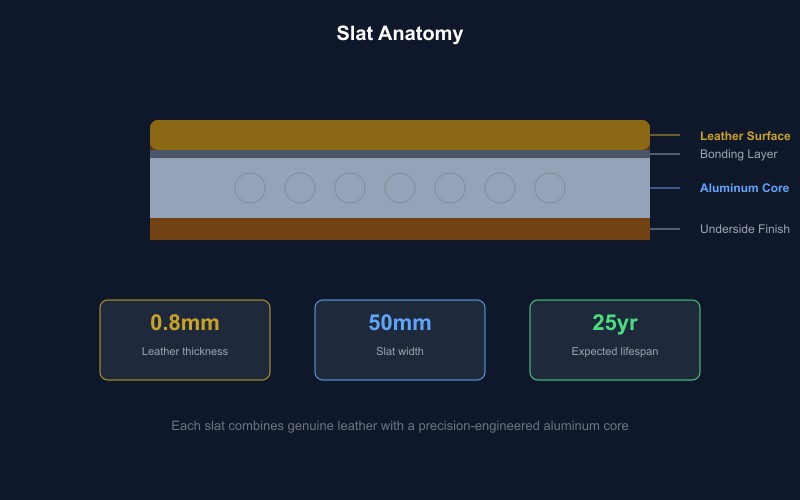
Each slat in a premium leather venetian blind consists of carefully selected and processed components:
The Leather Outer
The visible surface uses full-grain or top-grain leather, selected for consistency of texture and color. Premium manufacturers source leather that has been tanned using methods that preserve the material’s natural breathability and flexibility.
The Core Structure
Beneath the leather wrapping lies a precision-engineered core — typically aluminum — that provides structural rigidity and ensures the slat maintains its shape over decades of use. This core also enables compatibility with standard venetian blind mechanisms and motorization systems.
The Edge Finishing
The edges of each slat are finished to prevent fraying and ensure clean visual lines when the blinds are tilted. In premium products, this finishing is done by hand, ensuring consistency across the entire blind.
Leather Grades: What to Look For
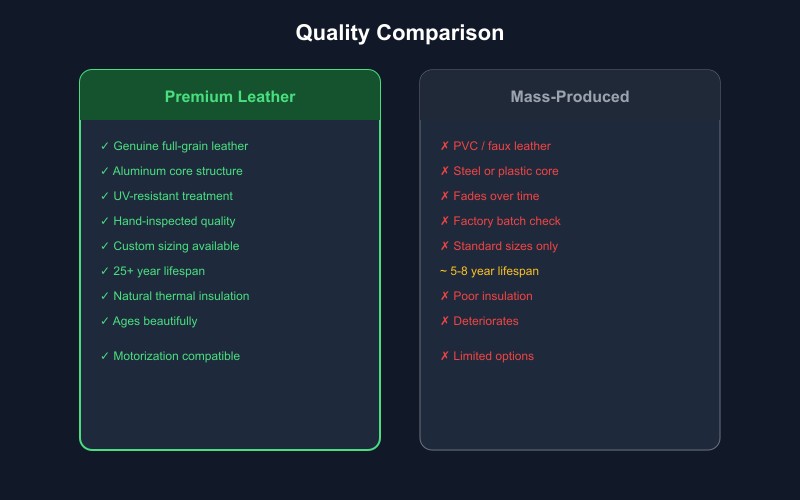
When evaluating premium leather venetian blinds, understanding leather grades helps you make informed specifications:
Full-Grain Leather
The highest quality available. Full-grain leather retains the complete grain surface, including natural markings and variations. It develops the most beautiful patina over time and offers maximum durability.
Top-Grain Leather
Slightly sanded to remove imperfections, top-grain leather offers a more uniform appearance while retaining most of the material’s natural qualities. It is an excellent choice for projects requiring visual consistency across multiple windows.
Bonded or Genuine Leather
Lower-grade options that mix leather fibers with synthetic binders. While more affordable, these materials lack the durability, aging characteristics, and tactile quality of higher grades. For premium projects, they are not recommended.
The Manufacturing Process
Creating a premium leather venetian blind involves multiple stages of skilled craftsmanship:
1. Material Selection
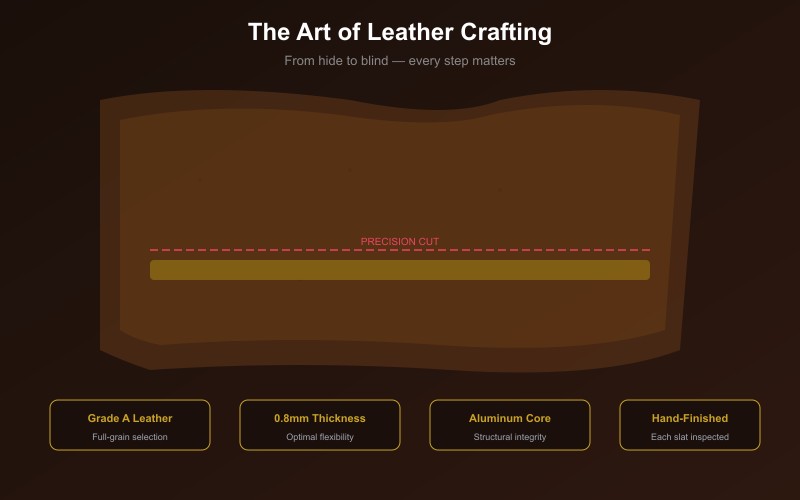
Each hide is inspected for consistency, thickness, and surface quality. Only hides that meet strict standards proceed to production.
2. Cutting and Shaping
Leather is cut into precise slat widths using specialized equipment. The cutting must account for the leather’s natural stretch and grain direction to ensure uniform slats.
3. Core Assembly
Each leather piece is wrapped around the structural core with precise tension — tight enough to prevent loosening, flexible enough to allow the leather’s natural movement.
4. Hardware Integration
Holes for the lift cords and tilt mechanism are punched with precision to prevent tearing. This step requires careful alignment to ensure smooth operation across the full width of the blind.
5. Quality Control
Finished slats are inspected for color consistency, edge finishing, and dimensional accuracy. Blinds are assembled and tested for smooth operation before shipping.
Caring for Leather Venetian Blinds
Premium leather requires minimal but specific maintenance:
- Regular dusting: Use a soft, dry cloth or a vacuum with a brush attachment on low suction
- Occasional conditioning: Apply a leather conditioner every 6-12 months to maintain suppleness
- Avoid harsh chemicals: Never use ammonia-based cleaners, bleach, or abrasive products on leather
- Manage humidity: Maintain indoor humidity between 40-60% to prevent drying or moisture damage
- Direct sunlight: While leather handles indirect sun well, prolonged direct exposure can cause uneven fading — consider UV-filtering window film for south-facing installations
Why Premium Matters for Your Projects
For architects and designers, specifying premium leather venetian blinds is a decision that pays dividends:
- Client satisfaction: The tactile and visual quality of leather blinds consistently exceeds client expectations
- Longevity: Premium leather blinds last 2-3x longer than standard alternatives, reducing lifecycle costs
- Design flexibility: The range of leather colors and finishes allows precise matching to design palettes
- Professional reputation: Specifying quality materials reflects your commitment to excellence
Explore the Pelle Collection
Our leather venetian blinds are crafted from carefully selected materials, designed to meet the exacting standards of architects and interior designers worldwide. Each blind is custom-made to your specifications.
[Get in touch](https://pelleblinds.com/contact-us/) to request our material samples, discuss custom color options, or learn more about our manufacturing process. We work directly with design professionals to deliver window treatments that elevate every project.